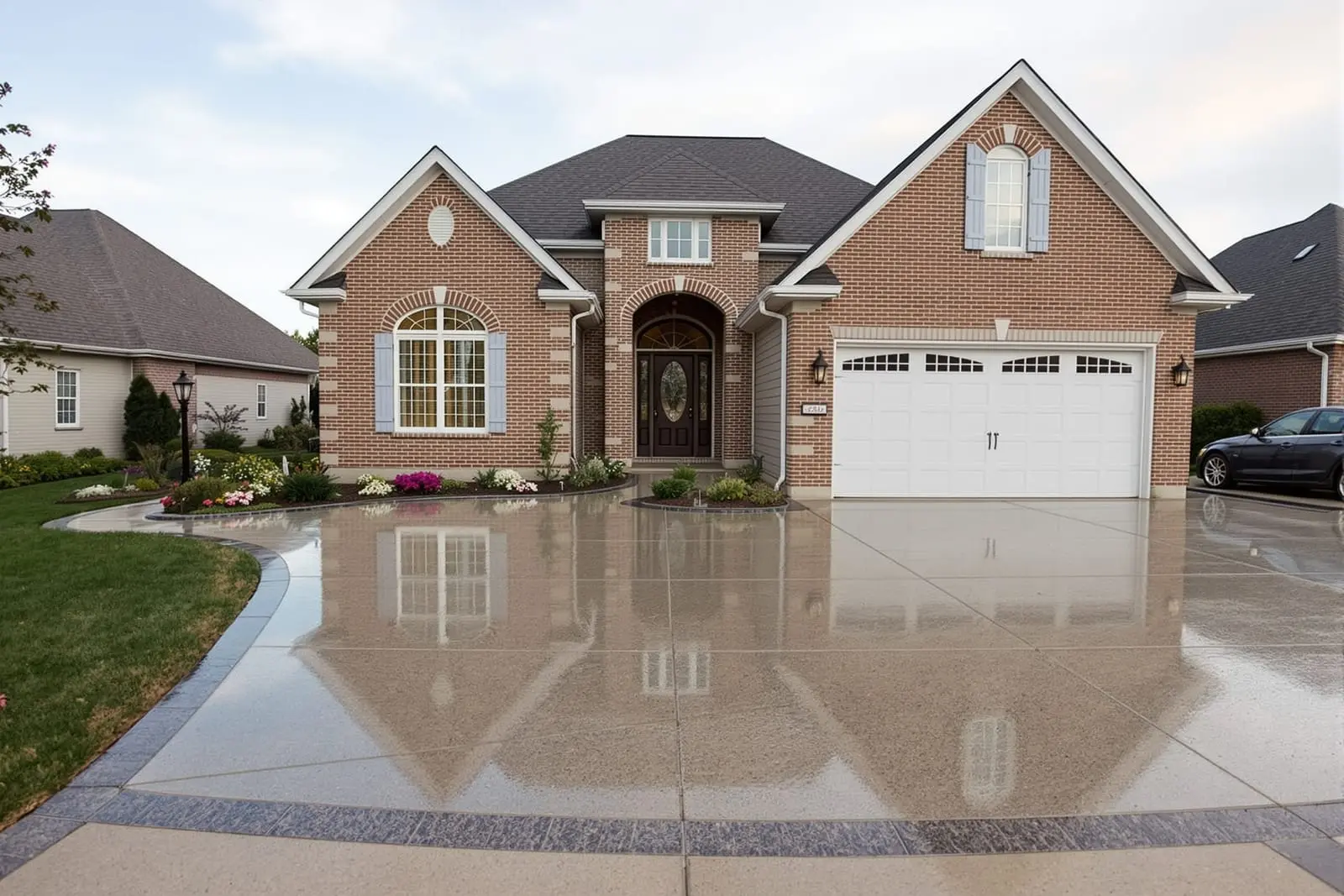
Enhance your hardscapes with stamped concrete in Savannah, GA that mimics stone, brick, or pavers. We install decorative concrete for patios, walkways, and pool decks with a variety of colors and textures. Our team carefully stamps and seals each surface for long term beauty. Enjoy the upscale look of custom patterns with the strength of concrete.
Vanguard Concrete Savannah provides professional stamped concrete throughout Savannah, GA and the surrounding area. Our licensed, insured crew delivers safe, clean, on-time work with a free estimate before anything begins. Call (912) 666-6253 or request your free quote.
Stamped concrete that fits Savannah homes and weather
Stamped concrete is a great way to get the look of brick, stone, or pavers without constant maintenance or loose pieces. At Vanguard Concrete Savannah, we install stamped concrete that is built for our humid coastal climate and salty air.
We work across Chatham County and the surrounding area on stamped patios, pool decks, walkways, driveways, and entryways. Because of Savannah’s heat, sudden storms, and occasional flooding, we choose mixes, reinforcement, and sealers that handle expansion, moisture, and UV exposure better than what you might see in a drier region.
If you are in a historic neighborhood or HOA community, we help you pick patterns and colors that complement existing brick, tabby, or old Savannah gray brick, and that are more likely to pass architectural review. We are happy to provide pattern samples and color charts that you can include with an HOA application.
Our goal is simple. Give you the upgraded look of natural materials, but with a solid concrete surface that is easier to live with and maintain in Savannah’s climate.
How our stamped concrete process works from start to finish
Every stamped concrete project starts with a site visit. Vanguard Concrete Savannah measures the area, checks drainage, looks at existing cracks or settling, and notes shade and sun patterns. In many Savannah yards the ground is a mix of fill dirt and old tree roots, so we probe the soil to decide how much base prep is needed.
Design comes next. We help you choose a pattern, such as ashlar slate, cobblestone, wood plank, or random stone, then pick a base color and release color that work with your home and surrounding hardscape. For example, near the marsh or on Tybee we may recommend cooler grays and subtle browns, while Midtown or Ardsley homes often lean toward brick tones that pair with existing steps or porch columns.
Once the design is set, we excavate and prepare the base. Typically we remove 4 to 6 inches of soil, compact the subgrade, then install and compact a crushed stone base. Where the native soil is soft or holds water, such as closer to the marsh or low spots in the yard, we may deepen the base and improve drainage with slight slopes and, if needed, small French drains.
We then set forms and place reinforcement. This is usually rebar or welded wire mesh, and on driveways we use thicker concrete with tighter rebar spacing. After we pour the concrete, we add color either integrally (mixed through the load) or as a color hardener on the surface, depending on the look and performance you want.
Stamping happens at a specific window while the concrete is still workable. We apply release, then press the stamp mats in a planned sequence so the pattern stays straight and joints line up. Edges, steps, and tight spots are hand detailed so the pattern does not stop abruptly. After curing, we pressure wash, clean off excess release, cut control joints, and then apply sealer when the slab has dried enough and the local forecast gives us a clear window.
Stamped concrete design options that work in Savannah
Stamped concrete is very customizable, and choosing the right combination of pattern, color, and texture is where a lot of the value comes from. Vanguard Concrete Savannah walks you through options that not only look good in photos but actually suit your home and everyday use.
Patterns: Popular choices in Savannah include ashlar slate for patios, cobblestone for walkways and entries, and wood plank stamps for pool decks and porches. Around older homes, a worn stone or brick pattern can bridge the gap between modern concrete and historic architecture. For larger driveways, we often suggest a larger scale pattern or a combination of a broom finish drive with stamped borders so the surface is safer for vehicles and more budget friendly.
Colors: Our humid climate and strong sun can fade weak color systems, so we use high quality integral and hardener colors along with UV resistant sealers. Earth tones like sandstone, walnut, and charcoal are popular because they hide minor dirt and pollen, which are common here in spring and after storms. We can also use subtle color variations or antiquing to mimic natural stone, not just a flat single color.
Textures and finishes: Around pools in Savannah, slip resistance is critical. We adjust the texture, use lighter colors to keep surfaces cooler, and add a non slip additive to the sealer if needed. On shaded patios under live oaks, where moss and algae can build up, we lean toward textures that are easy to clean with a light pressure wash, rather than overly deep joints that trap debris.
Borders and inlays: To tie stamped concrete into existing brick steps or porch columns, we can pour a contrasting border or create a band of different pattern, such as a smooth border around a slate field. These small design moves make the project look intentional and help with HOA and historic district approvals.
What affects stamped concrete cost and long term performance
Homeowners often ask why stamped concrete prices vary. Vanguard Concrete Savannah is fully transparent about what drives cost and how those choices affect durability.
Project size and access are big factors. A simple, ground level patio with easy truck access will cost less per square foot than a tight backyard that requires pump trucks, extra labor, or work around tree roots and existing utilities. Pattern complexity also matters. Deep or multi step patterns take more time to align and detail, and multiple colors or custom borders add to labor and materials.
Thickness and reinforcement are critical for performance. For light use patios we usually pour 4 inches thick concrete with standard reinforcement. For driveways, RV pads, and areas that see heavier vehicles, we recommend thicker slabs and stronger reinforcement. Skimping here can lead to cracking and settling, especially on the softer soils common in parts of Savannah and the Islands.
Site prep is another cost driver. If your yard holds water after a typical Savannah thunderstorm, we will likely recommend extra base material, improved draining slopes, or small drains to avoid standing water on or under the slab. Fixing poor drainage after the fact costs more than doing it right upfront.
Sealer choice and maintenance also affect long term results. Glossier sealers highlight color and pattern but can be more slippery when wet if not treated correctly. We often use lower sheen, breathable sealers in humid and shaded areas to reduce the risk of whitening or peeling. We will tell you exactly what to expect so you can budget for resealing and simple cleaning over time.
Common issues, maintenance, and what Savannah homeowners should expect
Stamped concrete is durable but not indestructible, and it behaves differently in Savannah’s climate than in drier regions. Vanguard Concrete Savannah believes you should know what to expect before you commit.
Hairline cracks can occur in any concrete, even with good reinforcement. Our job is to minimize them by using proper subgrade prep, rebar or mesh, control joints, and careful curing. When cracks do happen, we work to keep them tight and place joints in ways that encourage the slab to crack where it is least noticeable within the pattern.
Sealer wear is normal, especially on high traffic areas or in salty air near the coast. Typically, stamped concrete in our area benefits from resealing every 2 to 4 years, depending on sun exposure, traffic, and how often the area is pressure washed. We guide you on gentle cleaning methods and recommend avoiding harsh chemicals that can dull the sealer.
Moisture and algae can be an issue under live oaks or on the north side of a house. Light, periodic cleaning with a fan tip pressure washer or a soft brush, plus an appropriate cleaner, usually takes care of buildup. Choosing a slightly more textured pattern and an appropriate sealer also helps with traction during our wet seasons.
Before you hire any stamped concrete contractor in Savannah, ask about their base prep approach for our soil conditions, what reinforcement they use, how they handle drainage, and what sealer system they rely on in this climate. Vanguard Concrete Savannah is glad to walk you through these details on site, show you real local projects, and create a stamped concrete surface that looks good and holds up to our weather, not just on day one but for many years.
“
Professional stamped & decorative concrete, done right the first time, quality materials, honest pricing, and results that last.
Vanguard Concrete Savannah
Stamped & Decorative Concrete Across Our Service Area