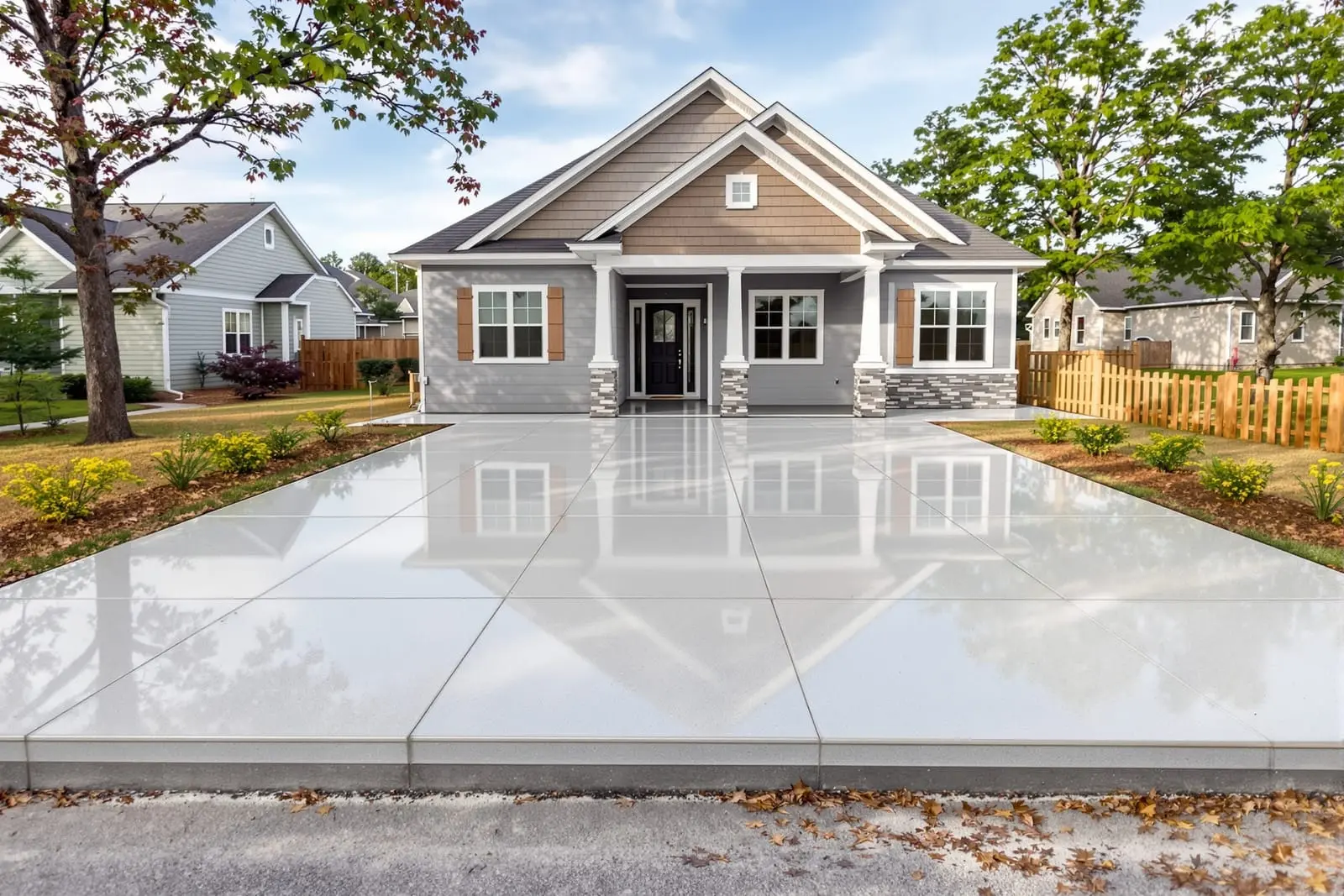
Get a stable base for your project with professional concrete slab installation in Savannah, GA. We handle slabs for sheds, room additions, workshops, and more, including excavation, compaction, and reinforcement. Our crew checks elevations and thickness so your slab supports the intended load and stays level. Start your structure on a solid foundation that is built to spec.
Vanguard Concrete Savannah provides professional concrete slab installation throughout Savannah, GA and the surrounding area. Our licensed, insured crew delivers safe, clean, on-time work with a free estimate before anything begins. Call (912) 666-6253 or request your free quote.
Concrete slab installation in Savannah that is built for Lowcountry conditions
When you hire Vanguard Concrete Savannah for concrete slab installation, you are getting a crew that builds specifically for coastal Georgia, not a one-size-fits-all approach pulled from a textbook. Our slabs have to live through salty air, high humidity, sudden thunderstorms, and clay soils that hold water. We plan and place every slab with those local conditions in mind so it stays flat, drains properly, and carries the weight you need for years.
Most homeowners and small businesses in Savannah come to us for slabs for driveways, garages, patios, shops, room additions, and sheds. Each type has a different load and use, so we do not quote or build them the same way. For example, a backyard patio that supports furniture and a grill does not need the same thickness or reinforcement pattern as a slab that will hold a work truck. During our first site visit, we walk the property with you, talk about how you plan to use the space, and measure clearances, access, and drainage.
Savannah weather shapes scheduling too. In the hottest months, we often pour early in the morning so the surface does not dry too fast and crack. In the cooler, wet winter periods, we watch the forecast for extended rain that can soften the subgrade. We would rather shift a pour by a day than give you a slab that was placed on mud. That kind of local judgment is what you are paying for when you choose Vanguard Concrete Savannah.
How we prepare your site for a long-lasting concrete slab
The strength of any concrete slab starts with what is under it. In many Savannah neighborhoods, you have a mix of sandy topsoil over clay that holds water. If a contractor skips careful prep work, that soil can shift and lead to cracks and sinking. Vanguard Concrete Savannah follows a clear process so the base under your slab is as solid as the concrete itself.
First, we mark the exact slab area and confirm property lines and setbacks if needed, especially in tighter Savannah lots. Then we strip off grass, roots, and soft topsoil until we reach firm ground. If we find organics, old fill, or debris like broken brick or buried wood, we remove it instead of burying the problem under concrete.
Next, we shape the subgrade to direct water away from structures. Around homes and detached garages, we pay special attention to keep the finished grade sloping away from the foundation. Standing water is a big issue in our region, and a slab that traps water against your house or shop will cause trouble over time.
We typically add and compact a layer of crushed stone or similar aggregate under the slab. This layer helps with drainage and spreads out loads. In the wetter parts of Chatham County or in low spots that stay soft after rain, we may increase the base thickness or use a different aggregate size so water has somewhere to go. A vibrating plate compactor or roller is used in passes until the base does not rut underfoot. Only after that do we set sturdy forms, double check elevations, and install any vapor barriers, conduits, or plumbing stubs that need to be in place before concrete is poured.
Slab thickness, reinforcement, and concrete mix choices
Concrete slab installation is not just pouring gray mud and letting it harden. The thickness, reinforcement, and mix design all change how well the slab handles weight, heat, and moisture. Vanguard Concrete Savannah explains these options in plain terms so you understand what you are buying.
For most residential patios and walkways in Savannah, slabs are commonly 4 inches thick. For driveways that will see passenger cars and light trucks, we often recommend 4 to 5 inches with proper reinforcement. For heavier loads, such as RV pads, boat storage, shop floors with lifts, or commercial applications, we may go to 6 inches or more and adjust the steel layout. Thickness and reinforcement are two of the biggest cost drivers, but cutting corners here is usually what leads to early cracking and repairs.
Reinforcement is usually either welded wire mesh, rebar, or a combination of both. In areas with softer soils or higher loads, we like to use a grid of rebar set on chairs so it stays in the middle of the slab instead of sinking to the bottom. Fiber reinforcement in the concrete mix can help control surface cracking but it does not replace steel in structural situations. We match the reinforcement plan to the use of the slab and the condition of the soil under it.
The concrete mix itself is also tailored. Typical residential work uses a 3,000 to 4,000 psi mix. For slabs exposed to more traffic or occasional chemical spills, like a workshop where automotive fluids may be present, we may specify a stronger mix and add air entrainment to handle our freeze and thaw swings, even if they are mild compared to northern climates. In summer, we adjust slump and set times so the concrete does not dry faster than we can finish it, which helps reduce surface dusting and plastic shrinkage cracks.
Pouring, finishing, and curing your concrete slab the right way
Once the base is compacted and reinforcement is in place, Vanguard Concrete Savannah schedules the concrete delivery and pour. On pour day, our crew is on site early to check forms, confirm elevations, and plan access for the truck so your yard or driveway is disturbed as little as possible. If a truck cannot reach the area, we may use buggies or a line pump for tighter Savannah lots and backyards.
We place the concrete evenly, working it into corners and around any plumbing, anchor bolts, or dowels. While the concrete is still plastic, we strike it off to the correct height, then bull float to smooth and bring up fine paste. This early work sets the plane of the slab and removes high and low spots that would cause ponding. At this stage we also hand-tool joints and edges where needed.
Control joints are not an afterthought. The concrete will crack as it shrinks and moves, and the goal is to make those cracks form in planned straight lines. We either tool joints during finishing or saw cut them shortly after the concrete gains enough strength. Joint spacing is based on the slab thickness and layout. For example, a 4 inch residential slab usually has joints every 8 to 10 feet, adjusted to match doors, posts, and other features so they look intentional.
Surface finish options depend on how you will use the slab. For driveways and most outdoor slabs we recommend a broom finish for traction in wet conditions, which we get plenty of in Savannah. For interior or covered shop slabs we can provide a steel trowel finish or a slightly textured surface that works well under future coatings. Once finishing is complete, we start curing. In our climate, proper curing is critical, so we often use curing compound, light water misting, or coverings to hold in moisture for the first several days. This slows down the cement hydration so the slab gains strength and resists early cracking.
Cost factors, common problems, and what to ask before you hire
The price of a concrete slab installation in Savannah is driven by more than just square footage. Vanguard Concrete Savannah looks at access for trucks or pumps, how much grading and base work is needed, slab thickness, reinforcement type, and any special finishes or embedded items like conduits or anchor bolts. Slabs on flat, easily reached lots usually cost less than the same size slab in a tight downtown lane or a low backyard that needs extra fill.
There are also common local issues that need to be addressed up front. Poor drainage is a big one. If water already pools where you want your slab, we will talk through options such as raising the slab, adding drains, or reshaping surrounding grades. Another is tree roots. Live oaks and other large trees that Savannah is known for have root systems that can lift slabs over time. We discuss clearances and, if needed, root barriers or adjusted layouts to avoid future damage.
Before you hire any contractor, ask exactly how thick the slab will be, what reinforcement will be used, how joints will be placed, and what kind of base material and compaction process is planned. Ask how they plan to handle weather delays, and what curing method they use. A vague answer like "we do it the normal way" is a red flag. At Vanguard Concrete Savannah we put these details in writing so you know what to expect.
Also ask about permits and local code requirements. Some slab projects, such as attached room additions or garage slabs with plumbing, may require permits through the City of Savannah or Chatham County. We can coordinate with you and your builder or architect when needed so the slab meets both structural needs and inspection requirements. When the work is finished, you should have a slab that drains properly, carries the loads you planned for, and is ready for whatever you want to build on top.
“
Professional concrete slab installation, done right the first time, quality materials, honest pricing, and results that last.
Vanguard Concrete Savannah
Concrete Slab Installation Across Our Service Area