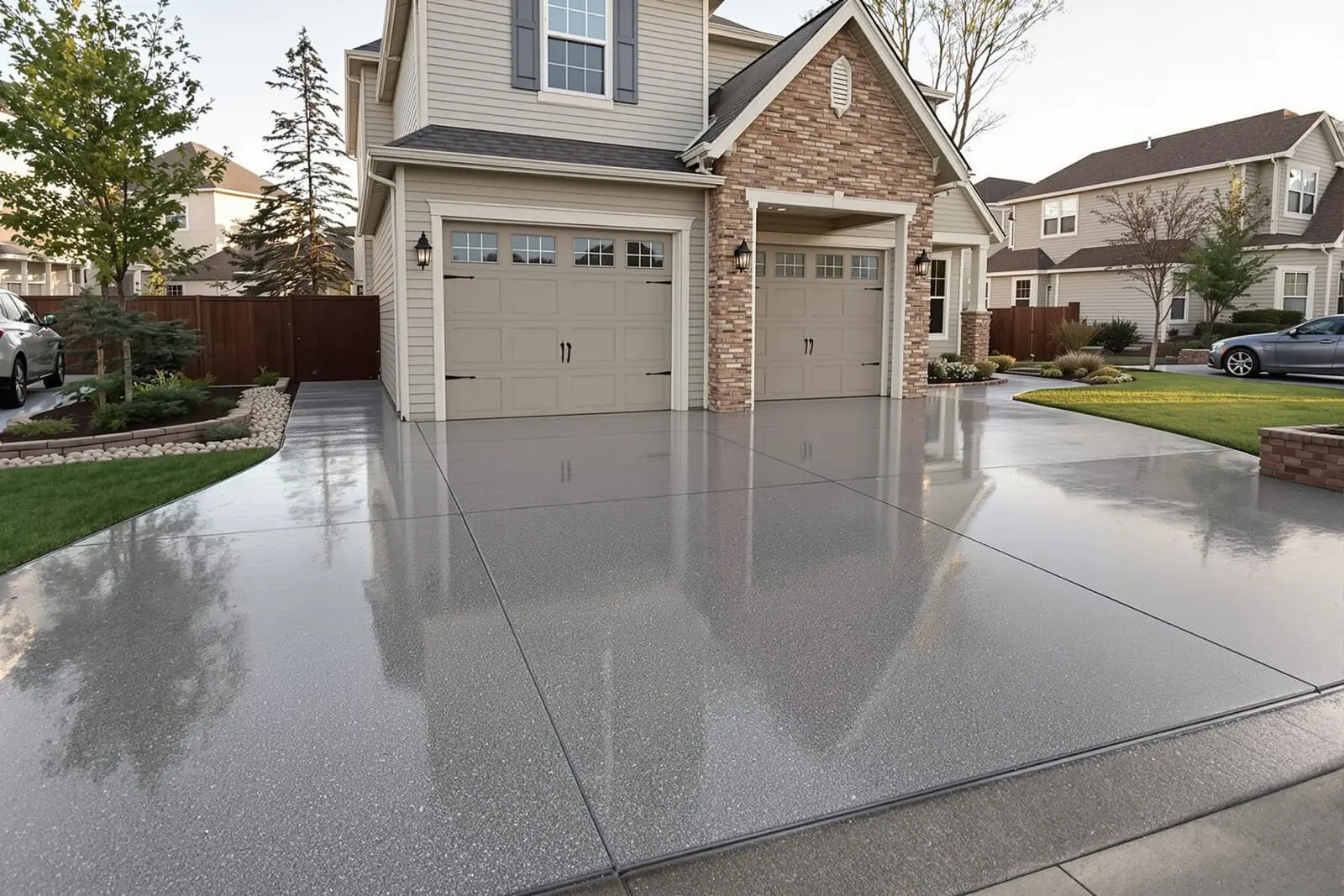
Upgrade your interior slabs with new concrete garage floors in Savannah, GA. We pour and finish floors that resist hot tire pickup, stains, and heavy loads. Our team can replace failing slabs or resurface sound concrete to improve levelness and appearance. Get a clean, durable surface ready for storage, parking, or finishing into living space.
Vanguard Concrete Savannah provides professional concrete garage floor throughout Savannah, GA and the surrounding area. Our licensed, insured crew delivers safe, clean, on-time work with a free estimate before anything begins. Call (912) 666-6253 or request your free quote.
Durable concrete garage floors for Savannah homes
If you are tired of cracked, dusty, or uneven concrete in your garage, Vanguard Concrete Savannah can help you upgrade to a floor that actually holds up to Lowcountry life. Our team specializes in concrete garage floors that handle daily parking, humidity, and tracked-in sand without turning into a mess.
In Savannah, we see a lot of older garages where the concrete has settled, the surface is flaking, or the slope is wrong so rainwater or car wash water runs back toward the house. When we visit your property, we look first at how you actually use the garage. Do you park multiple vehicles, store tools, run a home gym, or use it as a workshop in the evenings? That use tells us what thickness, reinforcement, and finish will make sense.
Most new concrete garage floors we install are 4 inches thick, with steel reinforcement wire or rebar where needed. For heavier loads, like large trucks or equipment, we may recommend a 5 inch slab and a tighter reinforcement grid. We set control joints in a pattern that reduces the chance of random cracking, and we pay close attention to slope so water moves toward the garage door or a floor drain instead of toward your interior door.
Because Savannah stays humid most of the year, we always talk about the surface finish. A slick, polished surface might look nice, but in a damp garage it can be dangerous. Many of our customers choose a broom finish or a light texture that provides grip even when the floor is wet. We can also prep the surface for a future epoxy or polyurea coating if you want a decorative or chemical resistant finish later.
Before any concrete is poured, we evaluate existing conditions. If you already have a cracked garage slab, we determine whether it makes sense to repair and resurface, or remove and replace. Things like wide cracks that move, significant settling at the door, or moisture pushing through the slab often point to replacement. Vanguard Concrete Savannah walks you through the options in clear language so you know exactly what you are getting.
Basement concrete floors that stay dry and stable
Savannah basements and lower level spaces are a little different from those in drier climates. Our low elevation, high water table, and heavy summer storms mean that moisture control is just as important as strength when it comes to basement concrete floors.
When Vanguard Concrete Savannah looks at a basement project, the first thing we want to understand is moisture. We check for signs of past seepage, efflorescence (that white powder on the walls or floor), and existing cracks. If the space is below grade, we may recommend a vapor barrier under the slab and in some cases a perimeter drain or sump system, which we coordinate with your waterproofing contractor.
For most finished basements, we pour a 4 inch concrete slab over compacted base material and a plastic vapor barrier. This slows moisture from the soil from rising into the concrete and affecting flooring like vinyl, engineered wood, or carpet tiles. We use control joints and sometimes fiberglass reinforcement to help manage shrinkage cracks, which are normal in concrete but can be controlled so they are less noticeable and less likely to telegraph through finished flooring.
If the basement is going to stay as a workshop, storage area, or home gym, many customers choose to keep the concrete exposed. In that case we focus on a smooth, easy to clean finish that will not dust or flake. We can hard trowel the surface for a cleaner look, then return after curing to grind and seal it. A clear sealer helps resist stains from tools, bikes, and equipment, and also makes sweeping up sand and debris much easier.
Because Savannah gets so humid, we also advise on how long to wait before putting down flooring over a new basement slab. Concrete might look dry after a week or two, but it can keep giving off moisture for much longer. We can perform a simple moisture test and coordinate our schedule with your flooring installer so you are not trapping moisture under new materials.
How we install or replace your concrete garage floor step by step
A solid concrete garage floor starts long before the truck arrives with the mix. Vanguard Concrete Savannah follows a detailed process so you know exactly what is happening in your space and why.
1. Evaluation and measurement: We begin with a site visit to check access, measure the space, and review drainage and existing concrete. We note ceiling heights, door clearances, and any low spots where water collects now. For attached garages, we also check how the slab meets the house foundation so we can avoid creating a trip edge.
2. Demolition and removal (if needed): If there is an old slab that is beyond repair, we break it up with saws and compact equipment and haul the debris away. We take care not to damage framing, plumbing, or electrical in the process, which is especially important in older Savannah homes with shallow utilities.
3. Base preparation: After demolition, we grade and compact the sub-base. This usually involves adding and compacting crushed stone so the soil underneath will not settle later. In some coastal neighborhoods where the soil is soft or sandy, we may add extra base depth or recommend minor subgrade improvements.
4. Forms, reinforcement, and slope: We set wood or metal forms along the edges to establish slab thickness and proper slope toward the door or drain. Then we install wire mesh, rebar, or fiber reinforcement depending on the load requirements. At this stage we also plan and cut in any expansion joints where the slab will meet other structures.
5. Pouring and finishing: We order a concrete mix that fits your project, typically a 3000 to 4000 psi mix, and place it using wheelbarrows or a pump truck depending on access. Once the concrete is down, we screed it level, float the surface, and then apply the finish we have agreed on, such as broom, light trowel, or a decorative prep finish ready for coatings.
6. Curing and joint cutting: Proper curing is what gives your new floor its strength. We usually recommend keeping foot traffic off for at least 24 hours and vehicles off for about a week, depending on weather. Within the first day we return or stay on site to saw cut control joints in planned locations. This helps control where minor cracks form and keeps the surface looking orderly.
Throughout this process, we keep communication simple and clear. You will know when the crew is arriving, when the loud work will happen, and when you can safely use the space again.
Costs, options, and common problems with concrete garage floors
Every concrete garage floor in Savannah is a little different, so we walk you through the cost drivers before we start. The main factors are size, thickness, reinforcement type, whether we are tearing out old concrete, and any finishing or sealing you want.
For a simple, standard single car garage with no demolition, costs are mostly about material and labor for forming, pouring, and finishing. Once we add tear out of an existing slab, disposal fees, and extra base work, the price increases but you also get a fresh start that should last for decades. If we are correcting serious drainage issues or building up low spots, we will explain exactly what is involved and why it matters in Savannah’s rainy season.
Finish choices also affect cost. A straightforward broom finish is the most economical and offers good traction when the floor is wet. Upgrades like machine troweling for a smoother finish, decorative saw cuts, or prepping the floor for an epoxy coating add labor time. Some customers choose to have us apply a penetrating sealer a few weeks after the pour to reduce staining from oil or tire marks.
Common issues we help homeowners avoid or correct include: floors that slope the wrong way, moisture wicking up through the slab, random cracking, and surface scaling from poor finishing. In coastal Georgia we also see damage where salt from the road and ocean air has been tracked inside over many years. Vanguard Concrete Savannah addresses these by using proper base preparation, targeted reinforcement, and industry standard finishing and curing practices that fit our climate.
If you already have a garage floor with problems, we will be honest about whether resurfacing is worth it. Thin overlays can look nice at first but will not fix movement from unstable soil or major settling. In those cases, replacing the slab may be the only way to get a truly level, long lasting floor. During your estimate, we show you the pros and cons of each approach so you can make an informed decision with real numbers in front of you.
What Savannah homeowners should know before hiring a concrete contractor
Hiring someone to pour or replace a concrete garage or basement floor is more than picking the lowest price. Your slab is a structural surface that has to work with your home, your vehicles, and Savannah’s climate for many years.
When you talk with contractors, ask specifically how they handle sub-base preparation. A solid, compacted base is one of the biggest differences between a floor that lasts and one that settles and cracks. Ask what thickness they plan to pour, what reinforcement they will use, and where they plan to put control joints. If answers are vague, that is a red flag.
For basements and some garages, you should also ask about moisture control. Will there be a vapor barrier under the slab. How will they address any existing damp spots or signs of seepage. In our area, ignoring moisture leads to flooring failures, musty smells, and peeling coatings later on.
Permits are another point to clarify. In many cases, interior flatwork like a garage floor replacement may not require a full building permit, but changes that affect structure or drainage might. Vanguard Concrete Savannah is familiar with local requirements and can explain when permits or inspections come into play.
Finally, look for a contractor who is willing to walk you through care for your new floor. We provide simple instructions on when you can walk and drive on the slab, when you can place heavy shelves or gym equipment, and how to clean and maintain the surface. With basic care, a properly installed concrete garage or basement floor should serve you well for decades, even in Savannah’s heat and humidity.
If you are considering a new concrete garage floor or updating a basement slab, Vanguard Concrete Savannah is happy to visit, take measurements, and give you a straightforward, detailed proposal tailored to your property and how you use it.
“
Professional garage & basement concrete floors, done right the first time, quality materials, honest pricing, and results that last.
Vanguard Concrete Savannah
Garage & Basement Concrete Floors Across Our Service Area